How to Present a Cabinet Design to a Client Before a Single Cut Is Made
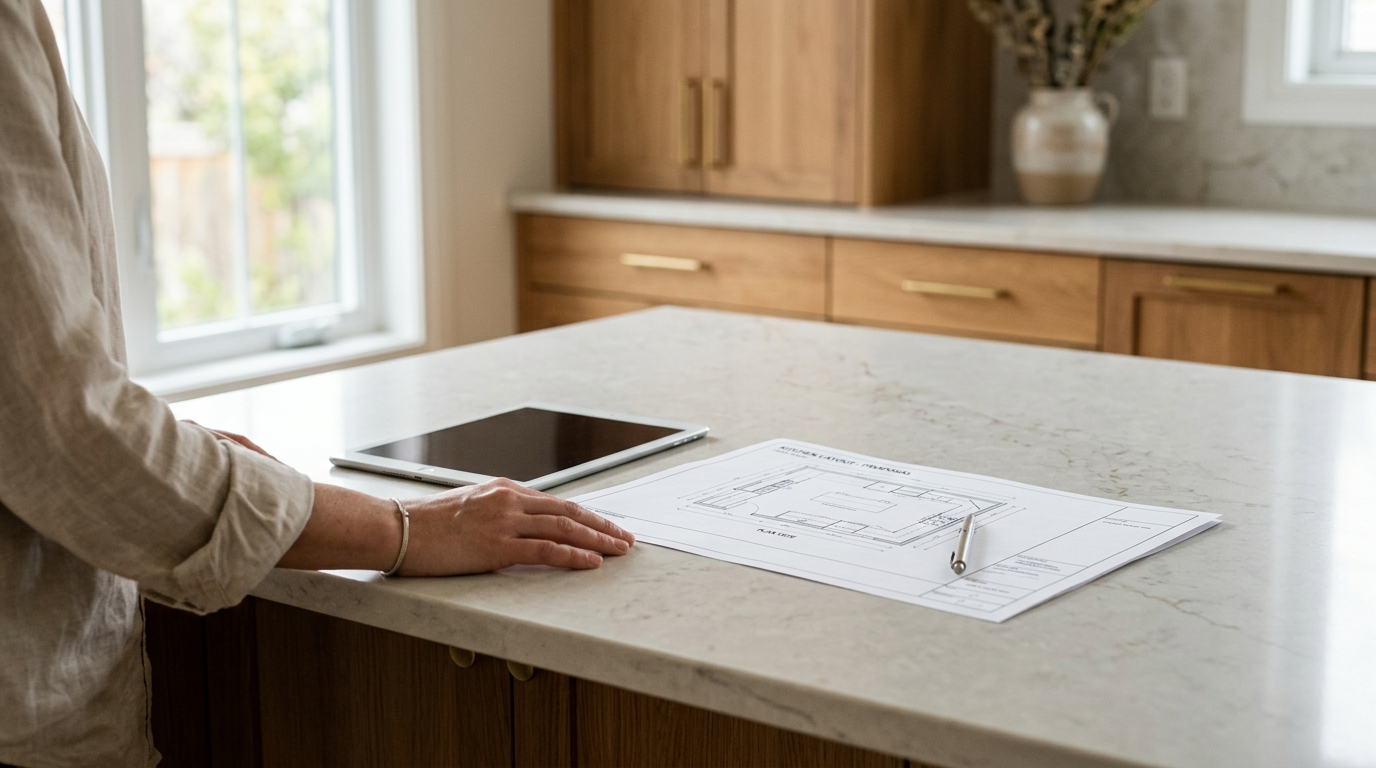
Most clients will tell you they understand the drawings. Most of them don't. That's not a knock on clients. Floor plans, elevation views, and cut sheets are second nature to you — but to the person hiring you, they're abstract lines on a page. They nod along, sign off, and then stand in their finished kitchen six weeks later wondering why the pantry cabinet isn't where they imagined it.
Why Clients Struggle to Visualize Designs
Cabinet design involves spatial reasoning that most people haven't trained for. Depth, clearance, the relationship between upper and lower runs — these don't read intuitively from a 2D plan. A client might look at a 36-inch base cabinet on paper and have no feel for whether it will overpower the room or feel too small.
This is especially true in kitchens and bathrooms, where proportions matter and small misalignments — a toe kick height they didn't expect, a door swing that blocks the dishwasher — create outsized frustration. The traditional workaround is to talk them through it. It works, but it's slow, it demands a lot of trust, and it still leaves room for misunderstanding.
What "Client-Ready" Actually Looks Like
There's a higher standard worth aiming for: a presentation where the client sees the design, not just the drawings.
That means a clean layout view with labeled dimensions. It means elevations they can actually read — not because they've been trained to, but because the output is clear enough that it's self-explanatory. And ideally, it means something they can take home, look at on their phone, and show their spouse without needing you in the room to interpret it.
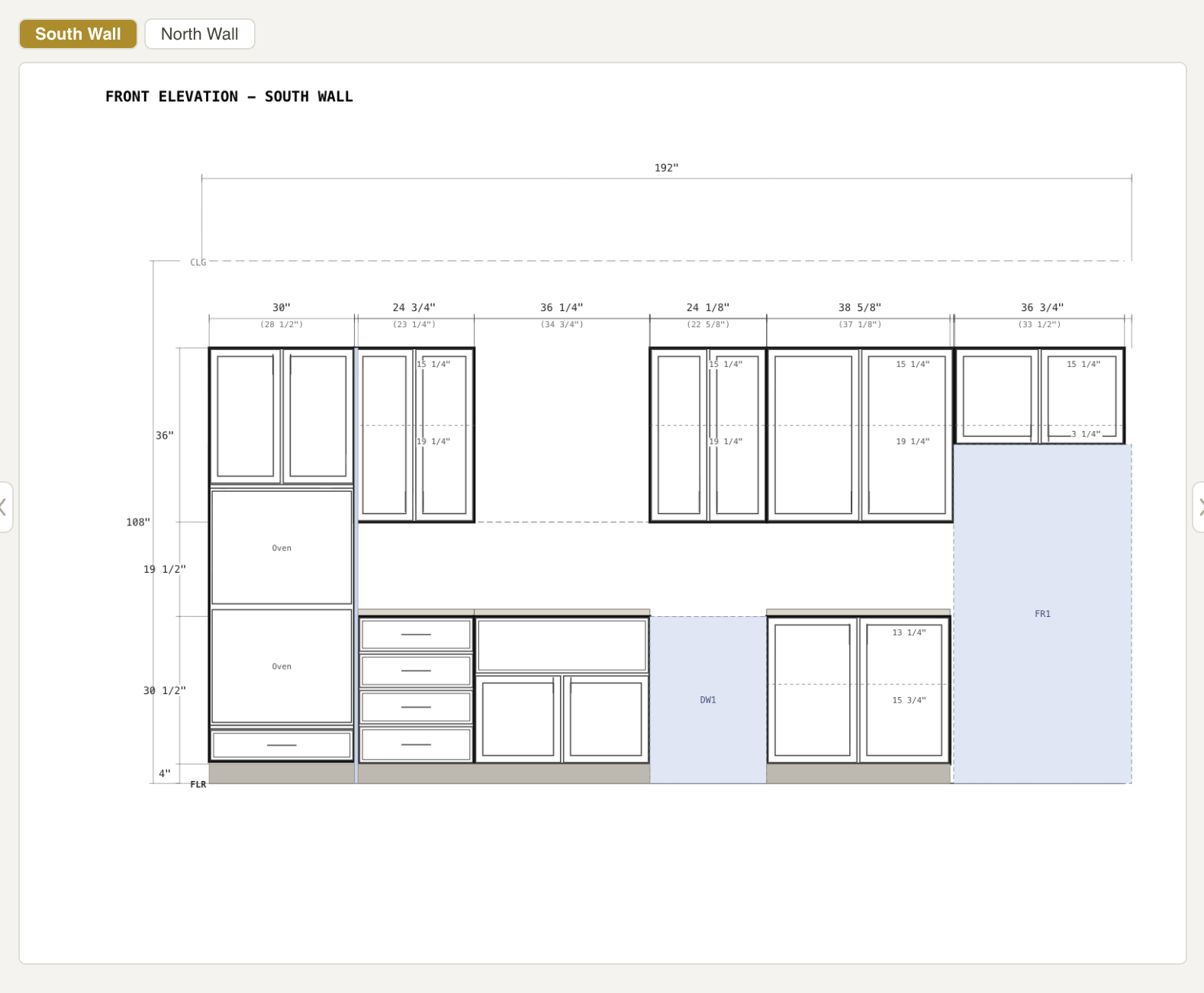
A client-ready elevation from Cabora — labeled cabinets, clean dimensions, nothing to interpret.
The Real Cost of Misaligned Expectations
A single change order on a mid-size kitchen can cost hundreds of dollars in rework, material waste, and scheduling disruption. Beyond the dollar figure, it erodes the relationship. Clients who were excited at the start become guarded. They second-guess other decisions. They're harder to work with on the next phase.
The investment in a cleaner presentation process pays back immediately — not just in avoided rework, but in how professional you look before the project even starts.
Start the Conversation on Solid Ground
The best time to prevent a change order is at the very first presentation. When a client sees exactly what they're getting — before any material is ordered, before any cut is made — you start the project with shared understanding instead of assumed agreement.
Cabora generates clean, client-ready layouts and PDF exports directly from your design. No drafting by hand, no wrestling with CAD software. Just a professional output you can hand to a client and walk away confident they understand what they approved.
Visit cabora.ai to see how it works.
- Most clients can't read technical cabinet drawings — they nod along and misunderstand
- Client-ready means something they can review without you in the room
- One change order from misaligned expectations can cost more than the whole presentation process
- Cabora exports clean, labeled layouts and PDFs directly from your design